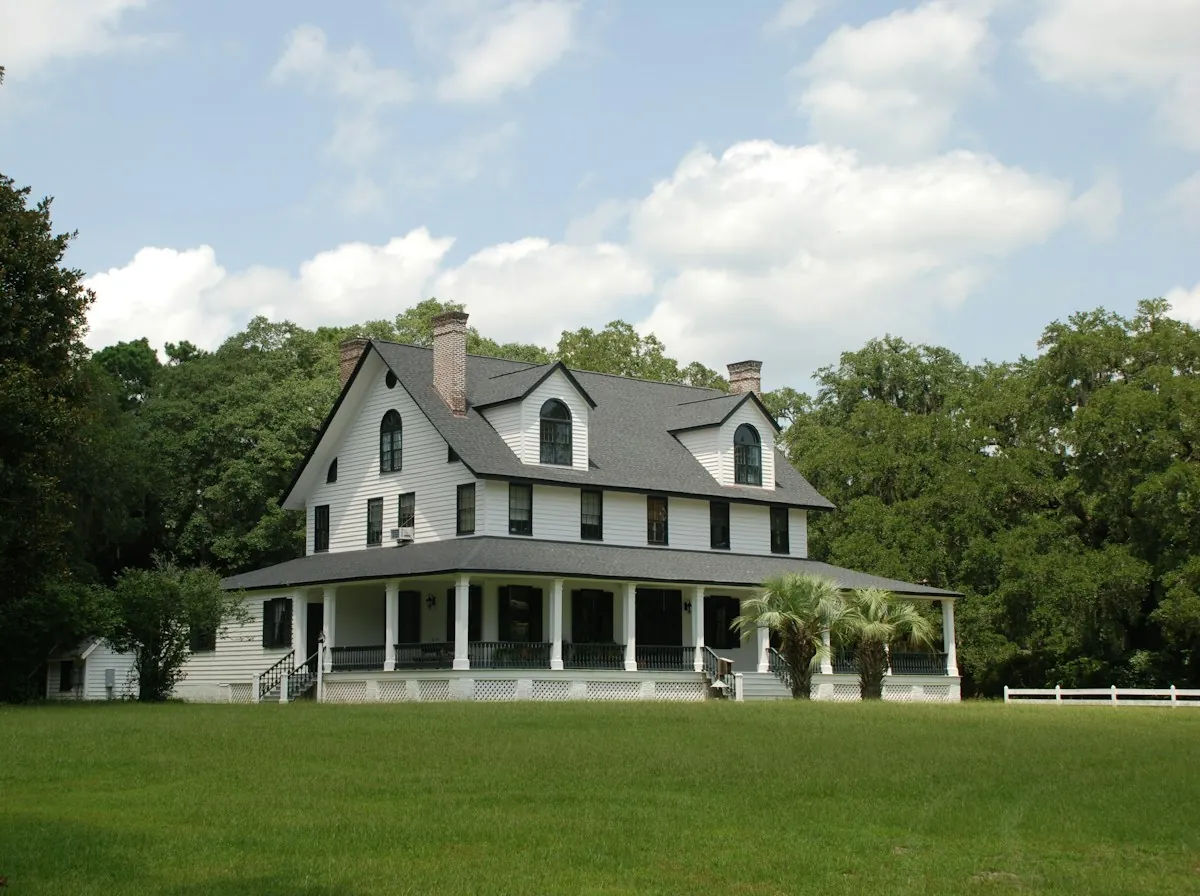
Roof Replacement in Holland Township, typically $9,500 - $26,000. Barn country. A property is usually several roofs. Local crew, a free written quote, and the permit pulled through the Holland Township construction office.
This is barn country, and a property here frequently means more than one roof. The house and the outbuildings are different jobs with different economics, and surveying them together in one visit is both cheaper and more useful than treating them as separate inquiries.
Where a property has several buildings, doing the roofs in a sensible order matters more than doing them all at once.
The township Milford was created out of, running along the Delaware and back up onto the plateau, largely rural and agricultural. Farmhouses and farm complexes on working and former agricultural land, with scattered later housing -- stone and frame houses, barns, sheds and outbuildings, often several buildings to a property.

8 lanes of roofing work, each priced against a written scope.
A property here frequently means more than one roof -- the house, and then a barn, a shed or a wagon house behind it.
Out here the honest question is whether one visit can do it.
Exposed-fastener panel over purlins is the normal answer on working buildings and has been for a century.
This is barn country and a barn roof is not a big house roof.
Farmhouse slate is frequently on a frame built to carry it, which makes stone-for-stone a genuine option rather than a structural project.
On farm properties the low-slope areas are usually utilitarian: a lean-to against a barn, a milk house, a modern addition to an old house.
Farm buildings are often ungutted entirely, and sometimes that is fine -- a barn on well-drained ground away from anything does not necessarily need one.
A survey here covers the house and the outbuildings, and on the outbuildings it happens from inside.
None of them appear in a national cost guide, and all three can move a number by an order of magnitude.
On housing this age, asphalt laid over standing seam or slate in the 1970s is common and nobody has been up since. That changes the tear-off, the disposal, the deck condition and the right replacement -- so it is established before a price rather than discovered on the second morning.
A barn roof is a large simple plane: cheap per square foot, expensive in total. There is no insulation, no ventilation problem and no ceiling to protect, so years of water did their damage to purlins and rafters. Where the frame is sound, a re-covering is excellent value. Where it is not, the covering is the smaller half of the job.
Natural slate outlives its nails and its valley metal by a long way. A roof shedding tiles is most often sound stone on failed fixings, and renailing with the slate reused costs a fraction of new slate at $22 to $35 a square foot. Getting this wrong in the wrong direction costs tens of thousands.
An old river town. Find out what is really up there.
Two centuries of building, scattered widely.
The biggest roofs here. Price the frame first.
Town roofs again, where access is the hard part.
Published ranges and straight answers, before you ring round.
Usually not, on a house. Replacing the roof COVERING on a detached one- or two-family dwelling is ordinary maintenance under N.J.A.C. 5:23-2.7 -- no permit, no notice, no inspection. Out here there is a second question that does not arise elsewhere: an agricultural building is a different case, and the answer depends on what it is used for. That gets asked of the township rather than assumed from a website, and each of the five municipalities in this service area has its own construction office.
For a standard house, $12,000 to $18,000 covers most 2,000 square foot properties, within a full range of $9,500 to $26,000. The more useful answer for this area is that you cannot price an old building from a published range at all, because the number turns on things nobody can see from the road: what is under the covering, how many layers, whether the deck is boards, and whether the frame was built for the weight of what is on it.
There is no honest answer to that from a roofing company, so here is what to judge on instead. Does the quote say what is under the current covering, or only what is going on top. On a farm building, does it describe the frame -- purlins, rafters, plate -- or only the sheets. On slate, does it distinguish between failed stone and failed nails. Is the decking a rate per sheet rather than a lump. Is there a New Jersey registration number on the document. A quote that answers all five came from somebody who went and looked.
It is a Florida rule and it does not apply in New Jersey. The 25% rule comes from the Florida Building Code Existing Building, where repairing or replacing more than a quarter of a roof within a year can require the whole thing to be brought up to current code. New Jersey has no equivalent provision. It appears in searches here because national content repeats it without saying which state it belongs to.
On slate, stone condition reported separately from fixings. Travel treated as a line you can see, not one you cannot.