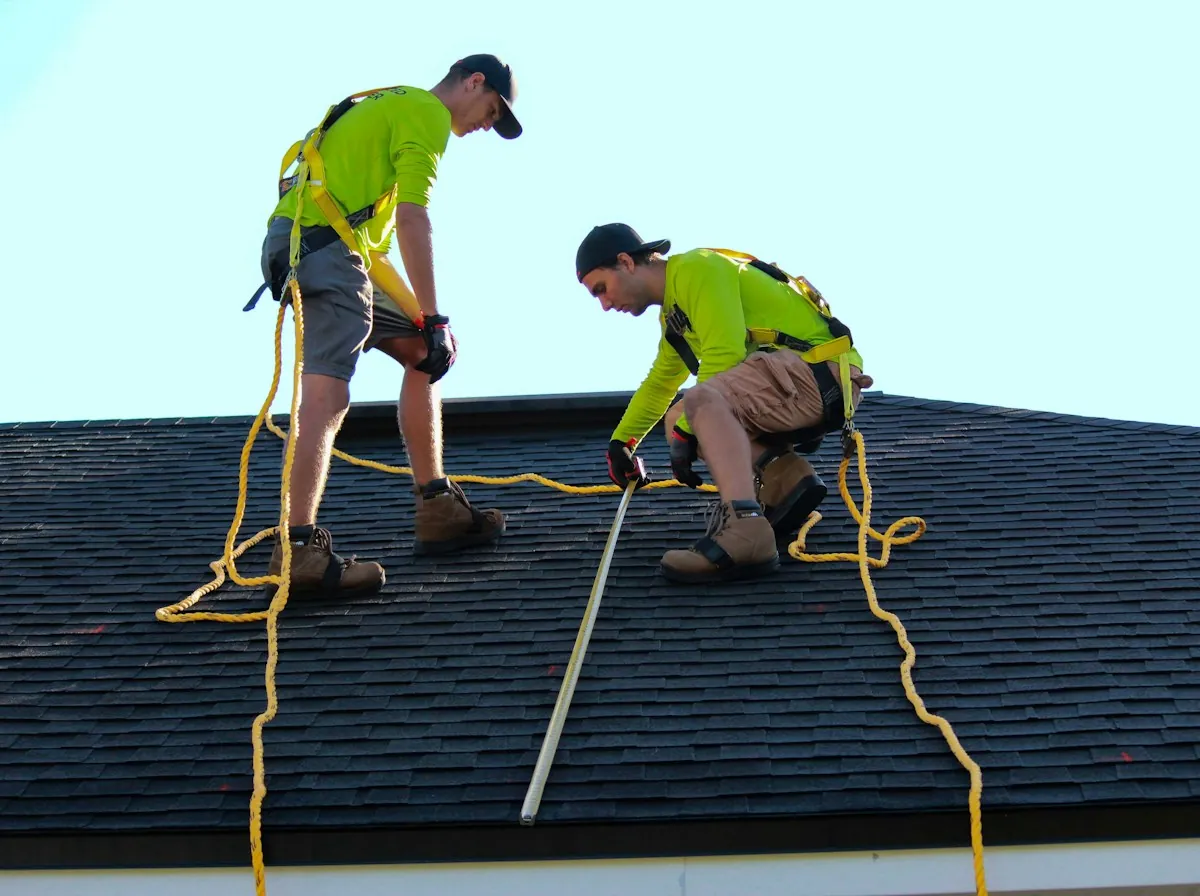
Roof Inspection in Holland Township from free with a quote. On old buildings the survey IS the service, because what is up there is rarely what people assume. Free inspection and a written quote.
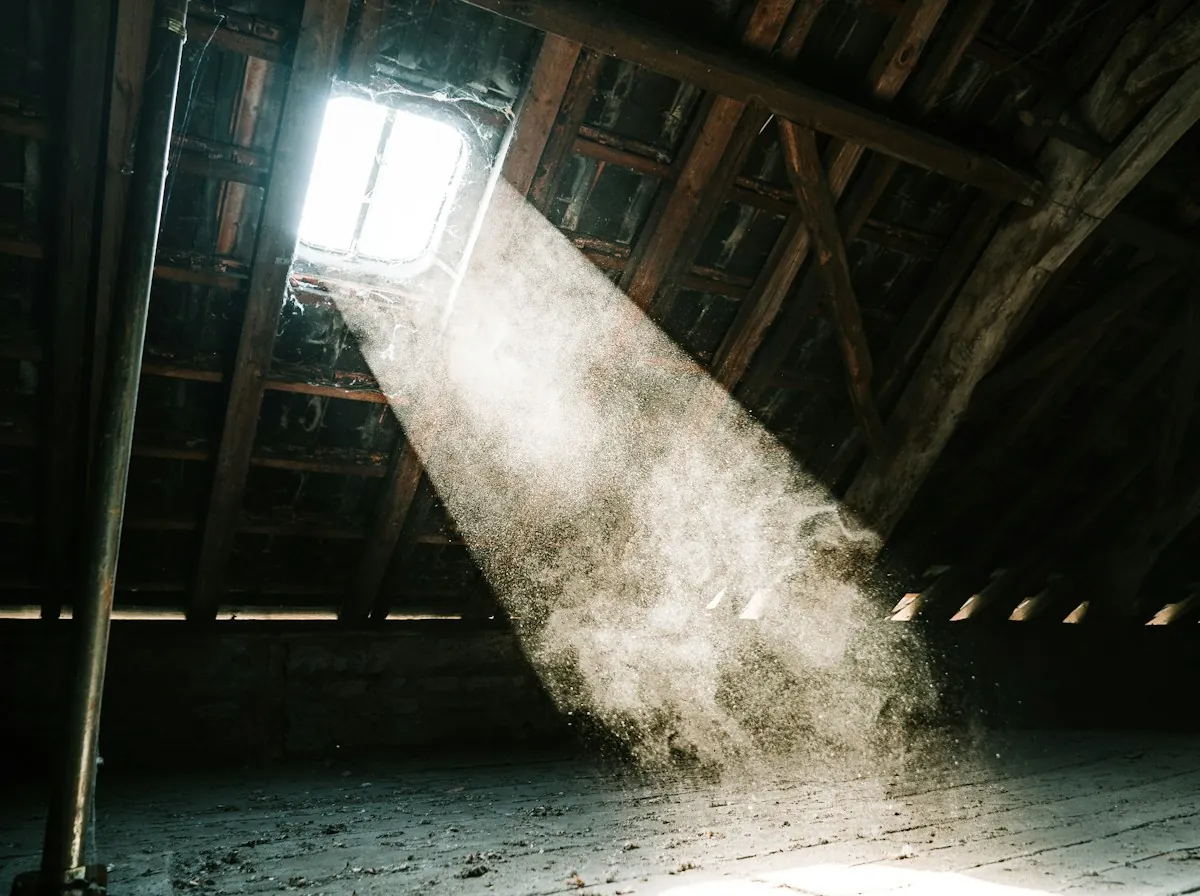
A survey here covers the house and the outbuildings, and on the outbuildings it happens from inside. Standing underneath and looking up at purlins and rafters is where the consequence of a leaking barn roof is actually visible -- not from the ground outside.
On a modern house an inspection tells you how much life the covering has left. On the buildings out here it tells you what the covering even is, which is a surprisingly open question when somebody laid asphalt over standing seam in 1978 and nobody has been up since.


The survey is free when attached to a quote, and what follows is the ordinary repair range of $350 to $1,800. On the buildings out here the survey IS the service, because what is up there is rarely what anybody assumes. A property here frequently means several roofs, and surveying them in one visit is cheaper than three separate call-outs months apart. House and outbuildings are priced separately because they are genuinely different work, but they are looked at together.
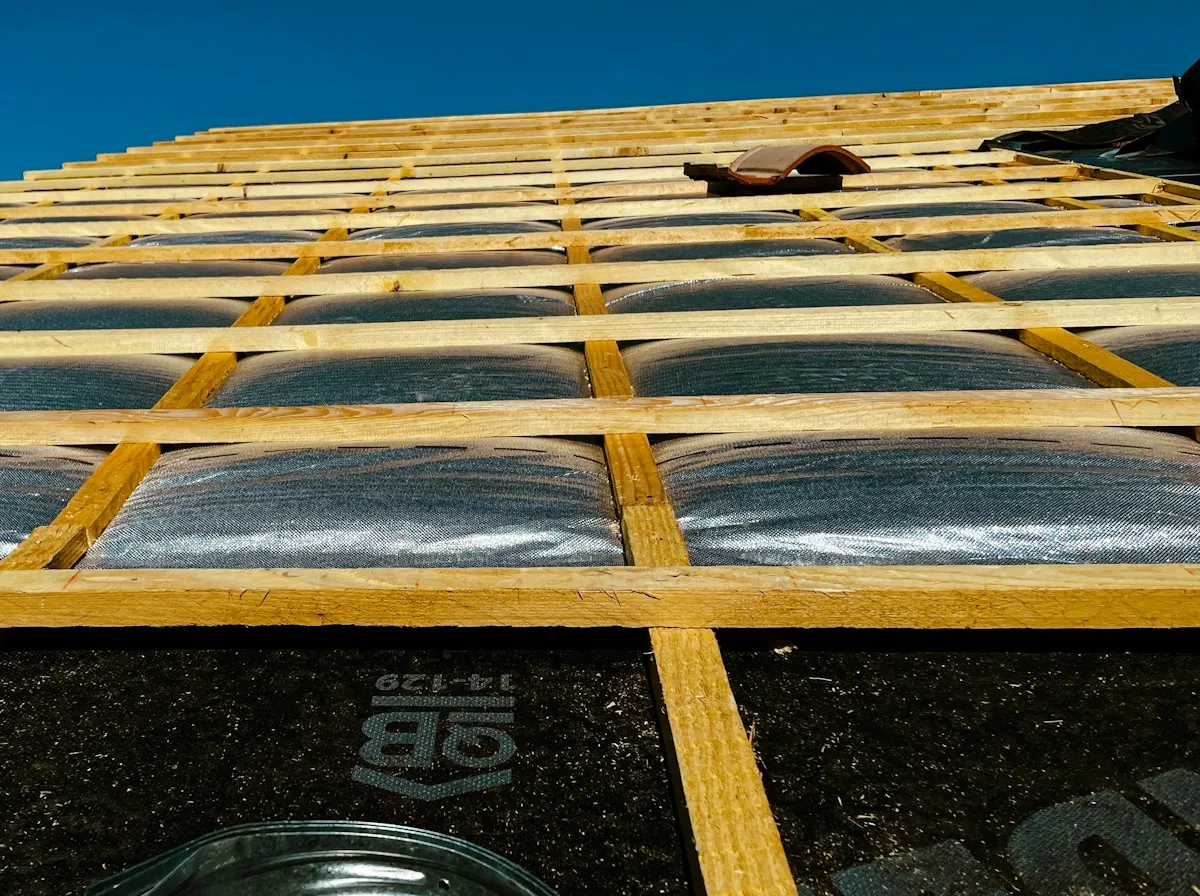
The layers, the deck, and what is under the visible covering. Somebody laying asphalt over standing seam or slate in 1978 and nobody going up since is a common story on housing this age, and it changes every number that follows.
The frame. Standing underneath and looking up at purlins and rafters is where the consequence of a leaking barn roof is actually visible -- not from the ground outside.
Whether the stone or only the fixings have gone. That single question is worth more than everything else in the report, because it is the difference between a few thousand dollars and a very large number.
This is barn country, and a property here frequently means more than one roof. The house and the outbuildings are different jobs with different economics, and surveying them together in one visit is both cheaper and more useful than treating them as separate inquiries.
Where a property has several buildings, doing the roofs in a sensible order matters more than doing them all at once.
The first two are the ones a suburban roofer working out here for the first time will struggle with.
The right answer describes purlins, rafters and the plate. A quote produced entirely from outside a farm building has priced the covering and ignored the thing that actually matters.
Nobody knows how much deck has softened until the covering is off. A rate per sheet is honest; a lump sum gets revisited upwards once the roof is open.
New Jersey registers home improvement contractors and the number belongs on the paperwork, not just a website footer. Its absence tells you something before you have read a price.
A property here frequently means more than one roof -- the house, and then a barn, a shed or a wagon house behind it.
Out here the honest question is whether one visit can do it.
Exposed-fastener panel over purlins is the normal answer on working buildings and has been for a century.
This is barn country and a barn roof is not a big house roof.
Farmhouse slate is frequently on a frame built to carry it, which makes stone-for-stone a genuine option rather than a structural project.
On farm properties the low-slope areas are usually utilitarian: a lean-to against a barn, a milk house, a modern addition to an old house.
Farm buildings are often ungutted entirely, and sometimes that is fine -- a barn on well-drained ground away from anything does not necessarily need one.
An old river town. Find out what is really up there.
Two centuries of building, scattered widely.
The biggest roofs here. Price the frame first.
Town roofs again, where access is the hard part.
Asked on every job of this kind. Answered here.
What is up there -- which on a building this age is a real question -- the layers, the deck, the frame where it matters, and on slate whether the stone or only the fixings have gone. With photographs, in plain language, including when the answer is that nothing needs doing.
Yes, and you should. They are different jobs and get priced separately, but looking at them in one visit costs less than two call-outs months apart and usually changes the order you would want to do them in.
Usually not, on a house. Replacing the roof COVERING on a detached one- or two-family dwelling is ordinary maintenance under N.J.A.C. 5:23-2.7 -- no permit, no notice, no inspection. Out here there is a second question that does not arise elsewhere: an agricultural building is a different case, and the answer depends on what it is used for. That gets asked of the township rather than assumed from a website, and each of the five municipalities in this service area has its own construction office.
It depends far more on the material than on the state, and out here the materials are not all asphalt. Architectural asphalt typically gives 20 to 30 years and three-tab 15 to 20. Standing seam metal commonly gives 50 and more. Exposed-fastener panel gives a long life too, but its screws and washers are consumables and want re-tightening -- a panel roof nobody has touched in 25 years is on borrowed time at its fixings rather than in its sheets. Natural slate outlasts all of them, frequently by a century, which is why so much of it around here needs nails rather than stone.
For a standard asphalt roof on an average house, yes -- that is well above the $12,000 to $18,000 most land at. For a large barn it can be entirely normal, because a barn roof is enormous even though the rate per square foot is the lowest of anything we do. And for natural slate at $22 to $35 a square foot it is unremarkable. The number on its own answers nothing; what the quote itemizes does.
What is actually under the covering, established before a price. The frame surveyed from inside on any farm building.