Flat Roofing in Alexandria Township from $5. $5 to $14 a square foot, and out here it is nearly always a later addition to something older. Free inspection and a written quote.
Later houses here have conventional flat additions that behave conventionally, and older ones have additions built against stone. The second kind is the one with nowhere obvious to terminate an upstand, which is why somebody has usually solved it with sealant.
Flat roofing installs at $5 to $14 per square foot, EPDM at $5 to $9 and TPO at $6 to $12. Almost none of it out here is original: it is a rear extension, a porch roof, a breezeway or a lean-to added to a building that predates the idea of a flat roof entirely.


Flat roofing installs at $5 to $14 per square foot: EPDM at $5 to $9 and TPO at $6 to $12. Almost none of it here is original -- it is a later addition to a building that predates the idea, so the junction with old masonry is the job. Scattered settlement means real distance between jobs, so batching work within the township genuinely brings prices down and we will say when it applies. Building ages here span two centuries, so nothing is assumed from what the neighbors have.
A simple rectangle with a real fall, at accessible height, on a conventional later house.
An upstand against stone or rubble wall, where there is often nowhere obvious to terminate and somebody has previously solved it with sealant. Sealant is a finish, not a fixing, and it is the commonest failure on this kind of roof.
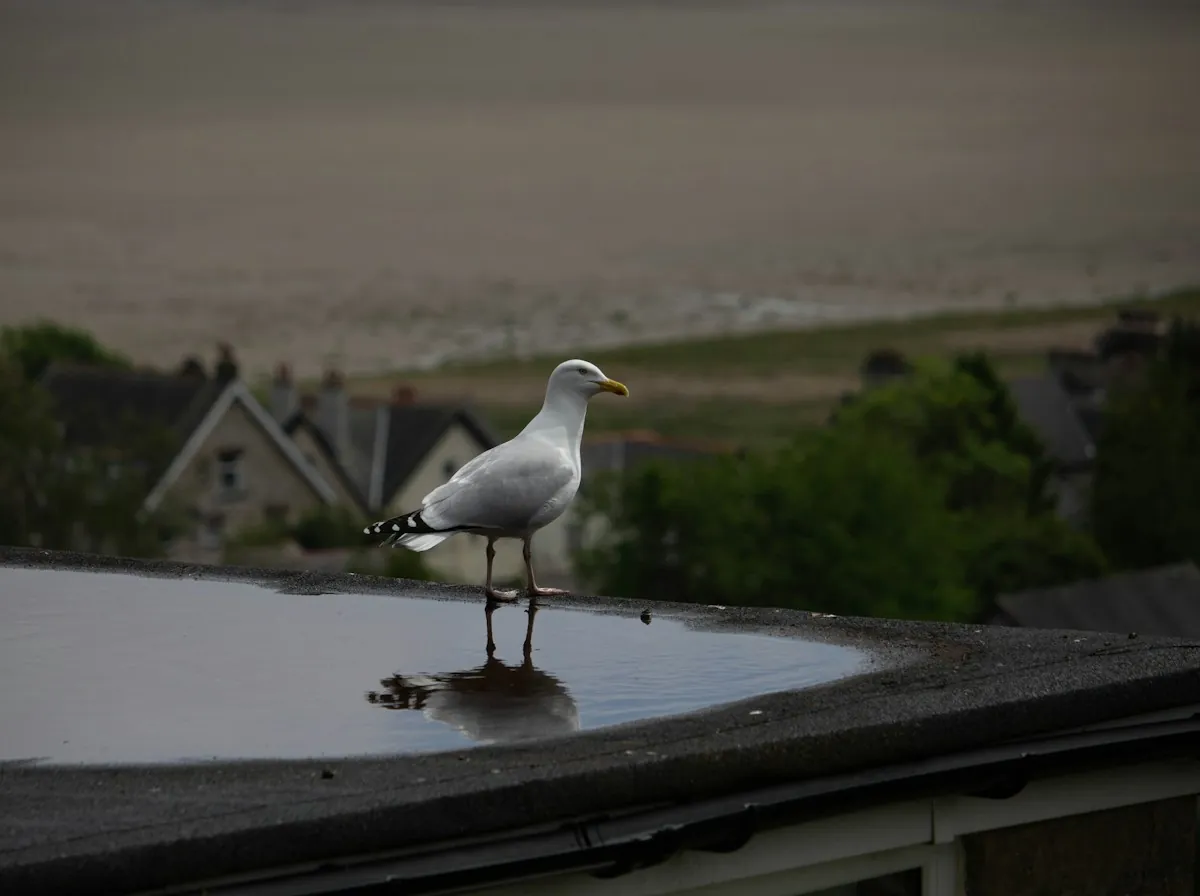
Water that clears within a day or two is normal. Water still there a week later means the fall does not run where somebody said it did, and that seam is being tested continuously.
The widest spread of building ages in this service area, which makes assuming anything a bad idea. A stone farmhouse and the house built on the next parcel in 1998 need entirely different surveys, and they are sometimes owned by the same person.
Scattered settlement means real distances between jobs, which is exactly why batching visits in a township is worth doing.
The first two are the ones a suburban roofer working out here for the first time will struggle with.
A roofer who answers 'the roof is shot' without distinguishing those is either guessing or selling. The difference is a factor of five or more in price.
Nobody knows how much deck has softened until the covering is off. A rate per sheet is honest; a lump sum gets revisited upwards once the roof is open.
New Jersey registers home improvement contractors and the number belongs on the paperwork, not just a website footer. Its absence tells you something before you have read a price.
The widest spread of building ages in this service area, which makes assuming anything a mistake.
Scattered settlement means real distance between jobs, so we will say openly when batching your repair with other work in the township would bring the price down.
With building ages this varied, the metal question splits cleanly: standing seam suits the older houses where it was probably original, panel suits the outbuildings, and on a 1990s house metal is a genuine choice rather than a restoration.
Former farms mean barns that are no longer used as barns, and that changes the brief.
With this range of ages, the first thing a slate survey settles is whether the roof is original slate or a later replacement, because those age very differently.
On sloping rural plots the question that matters is not the gutter but where the downspout discharges.
With building ages this varied the inspection has to start without assumptions.
An old river town. Find out what is really up there.
Barn country. A property is usually several roofs.
The biggest roofs here. Price the frame first.
Town roofs again, where access is the hard part.
Asked on every job of this kind. Answered here.
Not in itself. Water that clears within a day or two of rain is normal. Water still there a week later is a seam being tested continuously, and it usually means the fall does not run where somebody said it did.
Because it has probably been terminated with sealant rather than properly formed and fixed. On old masonry there is often nowhere obvious to tuck an upstand into, so somebody reaches for a tube. Sealant is a finish, not a fixing, and it is the commonest failure on this kind of roof out here.
It depends far more on the material than on the state, and out here the materials are not all asphalt. Architectural asphalt typically gives 20 to 30 years and three-tab 15 to 20. Standing seam metal commonly gives 50 and more. Exposed-fastener panel gives a long life too, but its screws and washers are consumables and want re-tightening -- a panel roof nobody has touched in 25 years is on borrowed time at its fixings rather than in its sheets. Natural slate outlasts all of them, frequently by a century, which is why so much of it around here needs nails rather than stone.
For a standard house, $12,000 to $18,000 covers most 2,000 square foot properties, within a full range of $9,500 to $26,000. The more useful answer for this area is that you cannot price an old building from a published range at all, because the number turns on things nobody can see from the road: what is under the covering, how many layers, whether the deck is boards, and whether the frame was built for the weight of what is on it.
In architectural asphalt, roughly $6,600 to $9,600 on New Jersey rates. But watch the units: 1,200 square feet of FLOOR is not 1,200 square feet of roof. Pitch, overhangs and dormers commonly make the roof area a third larger, and on a steep old farmhouse the difference is bigger still. That single confusion explains most quotes that look inexplicably far apart.
What is actually under the covering, established before a price. The frame surveyed from inside on any farm building.