Metal Roof Replacement in Frenchtown from $6. $6 to $12 a square foot for panel, $10 to $18 for standing seam -- and out here it is the default, not the upgrade. Free inspection and a written quote.
Standing seam on a town building has to be detailed against neighbors, parapets and frontages rather than run out across an open plane. That is fabrication work at every edge, and it is where a metal job in a borough gets expensive compared with the same area on a farm.
Exposed-fastener metal panel installs at roughly $6 to $12 per square foot and standing seam at $10 to $18. In most of this network metal would be the expensive alternative to asphalt. Out here it is frequently what the building already wears, and replacing like with like is the right answer rather than a missed chance to sell something pricier.


Exposed-fastener panel installs at roughly $6 to $12 per square foot and standing seam at $10 to $18. Out here metal is the default rather than an upgrade -- it is what the working buildings already wear, and replacing like with like is usually right. Town pricing rather than farm pricing. Close-set buildings, shared junctions and commercial frontage mean access, scaffold and working above somebody else's premises are real lines -- and on slate they push a per-tile price toward the upper end.
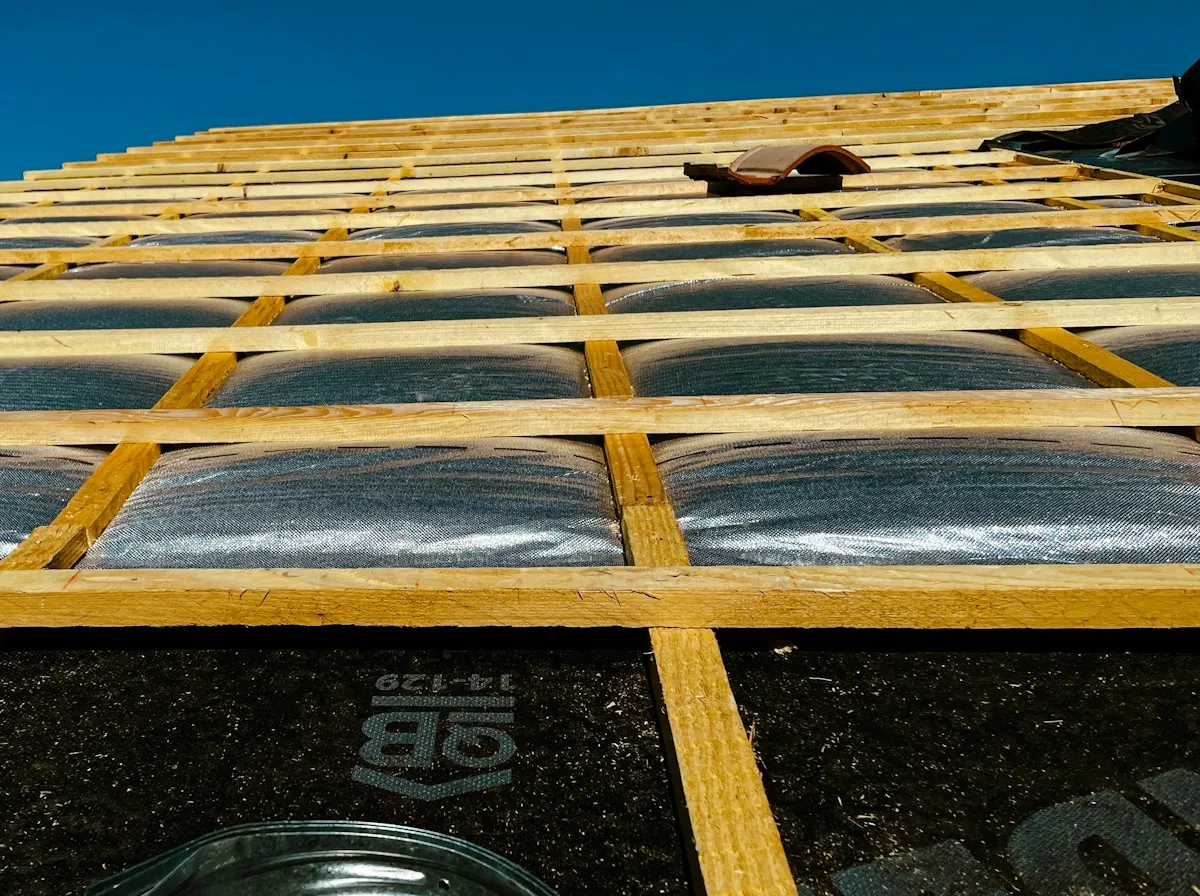
Exposed-fastener panel over purlins on a simple plane. It is the cheapest durable roof there is and it has been the correct answer on farm buildings for a century.
Standing seam, and edges. Concealed clips cost more, and every hip, valley and junction on a house roof is a fabricated detail rather than a cut panel.
Panel screws and their neoprene washers are consumables. They perish and back out, so a panel roof nobody re-screws in twenty-five years is not a roof that lasts forever. That is a reason to know, not a reason to avoid it.
Town roofs rather than farm roofs: tight access, shared and abutting buildings, and low-slope sections behind frontages on the commercial street. The constraint is getting to the roof and working over somebody else's premises rather than anything about the covering.
A separate borough with its own construction office, and the only place on this site where access is harder than the roof.
Worth knowing before you start ringing round, particularly on a building with no ceiling under it.
Roofs in this part of New Jersey fail at the edges over winter -- water backs up under the courses at the eaves, freezes, lifts them, and the ceiling below reports it during the first proper thaw. Wind coming up the river valley does the rest, and on an exposed plateau property there is not much between a roof and the weather.
Town roofs rather than farm roofs: close-set older buildings, shared and abutting walls, and commercial frontage on the main street.
On abutting town buildings a repair frequently sits at a junction somebody else owns half of, and on the main street it may sit over a business.
Farm buildings within the borough are mostly former ones, surrounded now by other buildings, so the job is as much about craning, access and working above neighbors as it is about the roof.
Close-set town buildings make slate work slower and more careful, because there is nowhere for anything to fall that is not somebody else's property.
Behind the main street frontages there are genuine low-slope roofs over commercial space, with the access and trading-hours constraints that go with them.
Close-set buildings mean downspouts discharge within feet of a boundary or onto a shared surface, so where the water goes after it leaves the roof is part of the design and occasionally part of a conversation with a neighbor..
On abutting town buildings, part of the inspection is establishing what can actually be reached and what belongs to somebody else.
An old river town. Find out what is really up there.
Barn country. A property is usually several roofs.
Two centuries of building, scattered widely.
The biggest roofs here. Price the frame first.
Asked on every job of this kind. Answered here.
Exposed-fastener panel is roughly $6 to $12 per square foot installed and standing seam $10 to $18. On a house, standing seam is usually worth the difference. On a barn or a machinery shed, panel over purlins is entirely sensible and always has been.
Yes, and nobody mentions it at the point of sale. The screws and their neoprene washers are consumables -- they perish and back out over a couple of decades. That is not a reason to avoid panel, which is excellent value; it is a reason to put it in the diary.
For a standard asphalt roof on an average house, yes -- that is well above the $12,000 to $18,000 most land at. For a large barn it can be entirely normal, because a barn roof is enormous even though the rate per square foot is the lowest of anything we do. And for natural slate at $22 to $35 a square foot it is unremarkable. The number on its own answers nothing; what the quote itemizes does.
In architectural asphalt, roughly $6,600 to $9,600 on New Jersey rates. But watch the units: 1,200 square feet of FLOOR is not 1,200 square feet of roof. Pitch, overhangs and dormers commonly make the roof area a third larger, and on a steep old farmhouse the difference is bigger still. That single confusion explains most quotes that look inexplicably far apart.
It is a Florida rule and it does not apply in New Jersey. The 25% rule comes from the Florida Building Code Existing Building, where repairing or replacing more than a quarter of a roof within a year can require the whole thing to be brought up to current code. New Jersey has no equivalent provision. It appears in searches here because national content repeats it without saying which state it belongs to.
What is actually under the covering, established before a price. The frame surveyed from inside on any farm building.